


The Embodiment of Social Inequality. A Bioarchaeological Perspective on Life Inequalities and Social Stratification in Ancient Greece (East Attica)

About
Social stratification was a fundamental feature of Greek society. This forms a sharp contrast to the ideal of egalitarianism, which was particularly prominent in democratic, classical Athens. This contradiction has intrigued previous researchers, and recent insights therefore suggest that political equality in the classical period went hand in hand with limited social inequality within a context of general economic prosperity. However, the impact on wealth inequality of subsequent historical shifts, such as the aftermath of the Peloponnesian Wars, Macedonian influences and the incorporation of Attica as a Roman province, has received too little attention. A second major research gap is that equality was primarily recognised amongst the narrow group of adult male citizens, thereby excluding population groups at the bottom of the socio-economic ladder, such as women, slaves and isolated island communities. One of the causes of this is the inherent bias of both written and archaeological sources. These largely reflect the perspective of that exclusive group of citizens, resulting in a somewhat distorted representation of low-status groups.
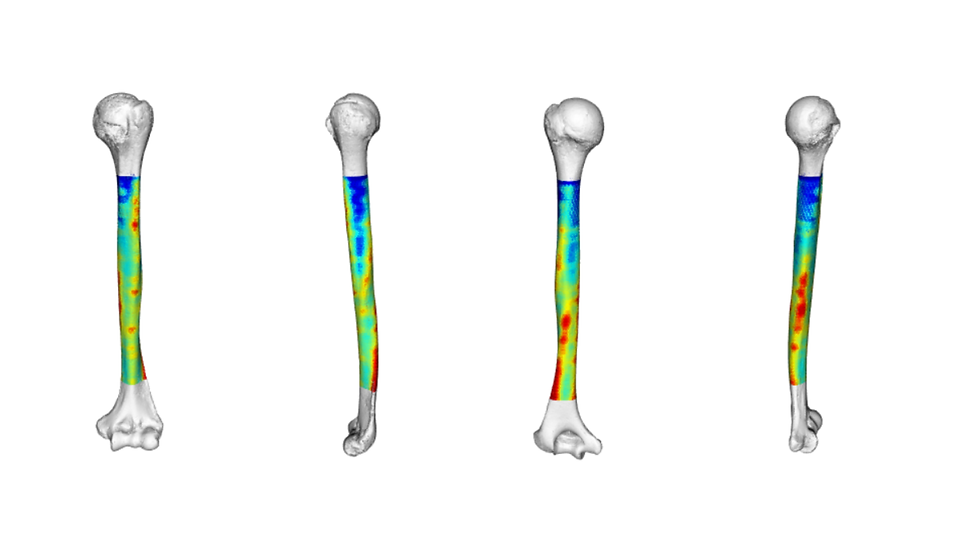
Starting from the human skeletal remains themselves, this PhD project of Glauke Wylin investigates how social differentiation and inequality were experienced and biologically embodied in populations from East Attica between the Archaic and Roman periods. By integrating endostructural analysis (biomechanical analysis) with multi-isotopic approaches, the research reconstructs patterns of physical activity and dietary practices. Applied to three sites in the Laurion area (Thorikos, Limani Passa and EBO) and the island of Agios Georgios, this approach offers strong potential for understanding social stratification in past societies, with particular attention to marginalized groups, including labourers and enslaved individuals associated with the Laurion silver mines, as well as isolated island communities.
Research Team
This project is a collaboration between
Contact: glauke.wylin@ugent.be
Doctoral student: Glauke Wylin
PhD project supervision: Prof. Dr. Isabelle De Groote, Prof. Dr. Roald Docter
In collaboration with Anthropologists Dr. Anna Lagia (Ghent University) and Anthi Tiliakou (MPI EVA), archaeologists Andreas Kapetanaios (Ionian University of Corfu).
Collaborating institutions: Malcolm H. Wiener Laboratory at Athens (ASCSA), Areteion Hospital Athens (NKUA), The Archaeological Museum of Lavrio, The Belgian School at Athens.