


Judith - The first countess of Flanders
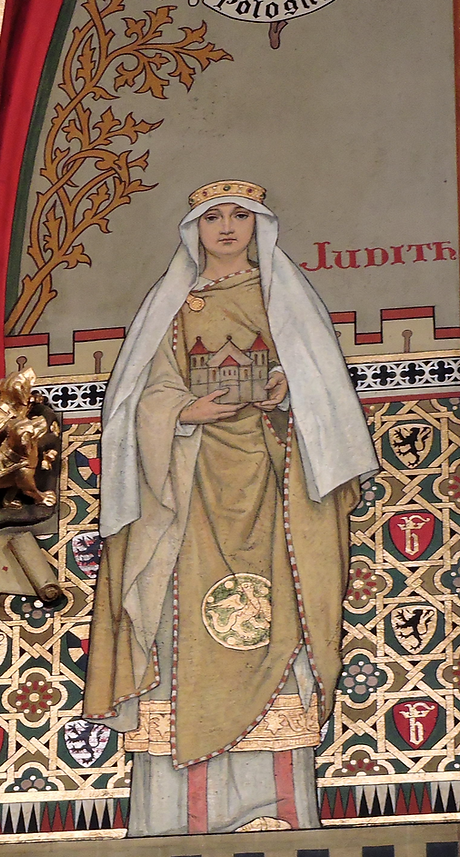
A team from UGent conducted new and large-scale research into the figure of Judith of West Francia, a princess who made it to first countess of Flanders in the early Middle Ages (9th century). The go-ahead for this research was given by the TV programme 'Het Verhaal van Vlaanderen'. In the third episode, the producers focused on Judith. Shooting followed with professor Steven Vanderputten (UGent) and city archaeologist Geert Vermeiren. During filming, they got talking and the idea was born to pull finds from under the dust and open a new investigation. Bones were found that experts attributed to Judith, the very first countess of Flanders. Scientific research was done, using the techniques of the time. It yielded very little. However, it was confirmed that it was a woman. Whether it was Judith is not certain. The bones disappeared in a box in the depot for 20 years... until now. ArcheOs committed itself to study the skeletal material and apply the newest biomolecular techniques to the bones. Not only the bones themselves, but also the mysterious figure Judith van Vlaanderen and the site where the finds came from form part of the investigation of the bigger UGent team.From 4th October until 19th January you can visit the exhibit about Judith that will showcase our multidisciplinary work to solve this "whodunit".
Find out more about the reconstruction here
The research
The study of the skeleton in grave S127 was coordinated by Prof. dr. Isabelle De Groote and Dr. Jessica Palmer in collaboration with several other labs at UGent and the Royal Institute for Cultural Heritage. It also included the study of the six other individuals buried in "Paradisio" in the Sint-Pietersabdij.

Anthropological analysis set out to extablish a biological profile including sex and age estimation as well as a full health assessment of the skeleton in grave S127.
Carried out at ArcheOs.

Stable isotope analyses was carried out to assess the diet of the individual. Wealthier people would have eaten a diet richer in animal or fish protein compared to the poor.
Carried out in collaboration with ISOFYS.

Strontium and oxygen isotopes were used to investigate if the skeleton showed signs of the geographical movement Judith made during her adolescence.
Carried out in collaboration with ISOFYS and A&MS

Proteomics and DNA analyses was used to confirm biological sex as well as gain insights into relatedness and fenotype. Did S127 have brown or blond hair? And what colour were their eyes?
Carried out in collaboration with ProGentomics and NextGent.
ArcheOs Research Team

PROF DR ISABELLE
DE GROOTE


ALEX BURNETT
PRUDENCE ROBERT
DR JESSICA PALMER
